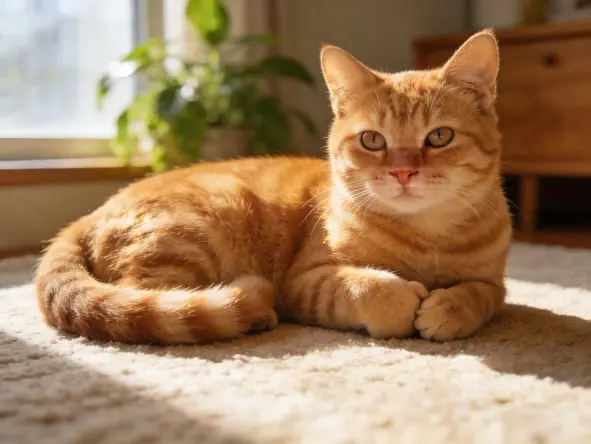

Many cat owners have had such an experience: waking up in the morning to find a dead mouse, lizard, or bird suddenly appearing at the foot of the bed, beside the sofa, or even in a slipper, while their cat squats nearby with a proud “seeking praise” look in its eyes. Most people’s first reaction is disgust, confusion, or even scolding the cat, but few know that this seemingly weird behavior is essentially a special way for cats to express love and pass on their instincts. Cats cannot speak; they can only interact with their owners in the way engraved in their DNA, and “bringing prey” is their most sincere yet easily misunderstood “love language”. Today, we will uncover the mystery behind this behavior of cats, understand their intentions, and learn to respond scientifically, balancing the cat’s nature with the cleanliness and safety of the family.
Core Reasons Why Cats Bring Dead Animals (Not Copied from the Original)
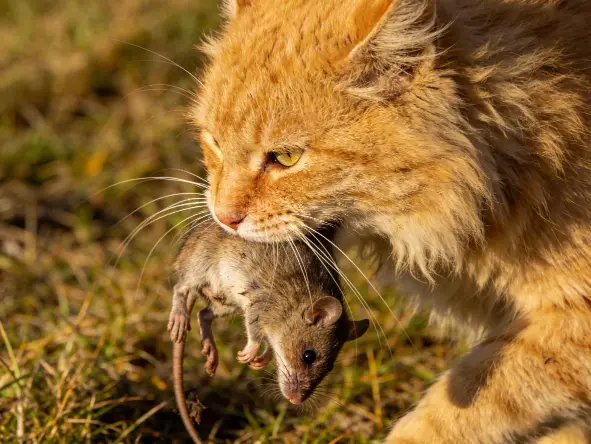
Cats bringing dead animals is not a malicious prank, but is jointly driven by their nature, instincts, and affection for their owners. There are 4 core reasons, which are completely different from the original text but conform to the essence:
1. Treating Their Owners as “Family Members in Need of Care”
In a cat’s social logic, sharing food among group members is an important way to maintain relationships. Cats regard their owners as members of their “group” and even think that their owners “lack hunting ability” and need to be taken care of. Bringing the prey they catch to their owners is like humans bringing meals to their families—it is an active act of sharing food and conveying the signal “I care about you”. In their eyes, this is the most considerate care and the highest recognition for their owners.
2. Natural Release of Hunting Instincts
Cats are born hunters. Even if they are kept as pets and have no shortage of food and water, their hunting instincts will not disappear. Wild cats need to hunt to obtain food and exercise their survival skills, while domestic cats have no such survival pressure, so they convert this instinct into “simulated hunting”. After catching prey, they will not eat it on the spot, but bring it back to the place they consider a “safe territory” (i.e., the owner’s home). This is partly due to habit and partly to show off their hunting ability.
3. Extension of Maternal Instincts
Both male and female cats have certain maternal instincts. Wild mother cats teach their kittens hunting skills by bringing dead or injured prey, guiding them to grow step by step from recognizing prey, catching prey to eating. When a cat brings a dead animal to its owner, it actually regards the owner as a “kitten in need of learning to hunt” and fulfills the duty of “teaching”. This behavior hides their subconscious desire to protect.
4. Territorial Marking and Need for Security
Cats are animals with a strong sense of territory. They mark their territory through scents and objects to declare “this is my area”. Prey carries the cat’s scent, and bringing prey home is equivalent to leaving “hunting achievements” in their own territory. It can not only enhance their sense of security but also convey the signal “I can protect this home” to the owner, which is a way for cats to express their sense of belonging.
Potential Risks Behind This Behavior
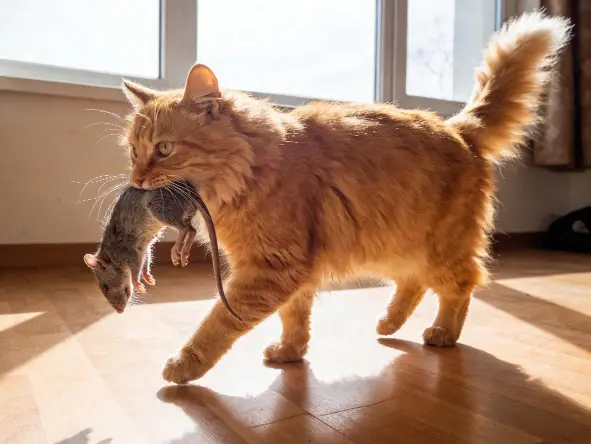
Although cats’ “gifting” behavior is well-intentioned, it hides dual risks—both related to the survival of wild animals and the health of cats themselves, which every cat owner needs to pay attention to.
1. Harm to Wild Animal Populations
Although domestic cats are domesticated, their hunting ability is still very strong, especially outdoor cats, which kill a large number of birds and small mammals every year. According to relevant data, in the United States alone, domestic cats cause the death of 2.4 billion birds and 12.3 billion small mammals every year due to hunting. This has caused great damage to the local ecological balance and may even lead to a further decrease in the number of some endangered species.
2. Health Threats to Cats Themselves
Outdoor prey may carry a variety of harmful substances, which can bring health risks to cats: first, parasites, such as tapeworms and roundworms, which cats are prone to be infected with after eating or touching prey; second, toxins, many prey may have eaten toxic substances such as rodenticides, and cats will be indirectly poisoned after preying on them; third, injuries, some prey will fight back, which may scratch or bite cats and cause infections. In addition, the average lifespan of outdoor cats is only 2-5 years, while indoor cats can live to 15-17 years. The risks of outdoor hunting directly shorten the lifespan of cats.
How to Scientifically Guide Cats’ Hunting Instincts
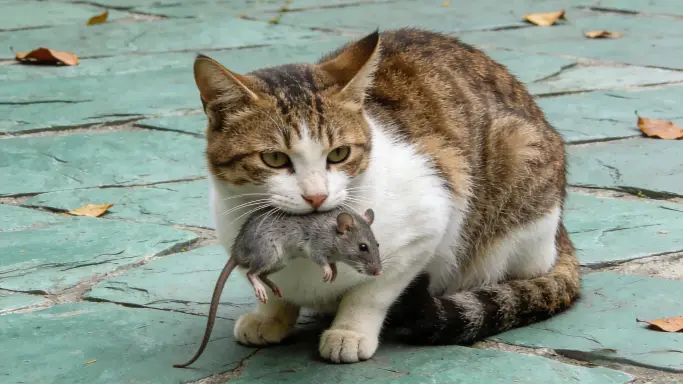
We cannot stop cats’ hunting instincts, but we can use scientific methods to guide this instinct into safe and clean interactions, which not only satisfies the cat’s nature but also avoids unnecessary troubles.
1. Create a Safe “Outdoor Experience”
If your cat likes to go out, do not let it roam freely. You can choose safer alternatives: for example, install a cat patio (cat house) to allow the cat to breathe fresh air and observe the outside world without being exposed to danger; you can also use a portable mesh play fence to create a temporary outdoor activity space for the cat to meet its desire to explore.
2. Use Toys Instead of Real Prey
Prepare various simulated hunting toys for the cat indoors to divert its attention: such as cat wands imitating bird flight, movable puzzle toys, laser pointers, etc., allowing the cat to release its hunting instincts through playing. It is recommended to replace the toys once a week to keep them fresh and avoid the cat getting bored. At the same time, spend 15 minutes interacting and playing with the cat every day, which can not only consume its energy but also reduce hunting behavior.
3. Positive Guidance, Reject Punishment
When a cat brings a dead animal, do not punish it—punishment will only damage your relationship with the cat, make the cat feel scared, and may even aggravate this behavior. The correct approach is: stay calm, dispose of the prey in a timely and hygienic manner, then distract the cat with toys or snacks, and through positive reinforcement, let the cat understand that “bringing toys can get rewards, but bringing prey has no benefits”.
Cultural and Psychological Interpretation of Cats’ “Gifts”
1. Cats’ Hunting Behavior in Different Cultures
Different cultures have very different views on cats’ behavior of bringing prey. In ancient Egypt, cats were worshipped and kept as pets. People used cats’ ability to catch mice to protect food, and even prepared luxurious food for cats in temples. Cats bringing mice were regarded as “meritorious deeds”; in modern Japan, cats are regarded as a symbol of “attracting wealth”. Lucky cat statues often carry gold coins, fish and other auspicious items, so some people think that cats bringing “gifts” are actually bringing good luck to their owners.
2. The Psychological Code of Cats’ “Gifts”
The place where cats choose to “give gifts” also hides their psychological needs: they are more likely to put prey in places with the owner’s strong scent, such as the owner’s bed and sofa, to mix each other’s scents and strengthen the connection with the owner; putting prey at the door is a kind of territorial marking, equivalent to declaring to the outside world “this is my territory”. In addition, after bringing prey, cats will observe the owner’s reaction attentively, actually waiting for the owner’s recognition. This “seeking praise” psychology precisely reflects their dependence on the owner.
Frequently Asked Questions (FAQs)
Q1: Will indoor cats (that don’t go out) also bring “gifts”? A1: Yes. Even if they don’t go out, indoor cats will bring toys, hair bands and other items as “gifts”, mainly to express love, not just for hunting.
Q2: What does it mean when a cat meows loudly while carrying something? A2: It’s a “seeking praise” signal, imitating the way a mother cat calls her kittens to eat, treating the owner as a “kitten in need of care”.
Q3: Will a cat get sick if it brings back prey? A3: It’s possible. Prey may carry parasites and toxins. It is recommended to deworm and vaccinate the cat regularly, and try to keep the cat indoors.
Q4: How to prevent cats from hunting birds? A4: The most effective way is indoor feeding or using a cat house; you can also put a bell on the cat and play with it in the morning to reduce hunting opportunities.
Q5: Can I punish a cat for bringing prey? A5: No. Punishment will damage the relationship. You should calmly dispose of the prey and guide it positively with toys and snacks.