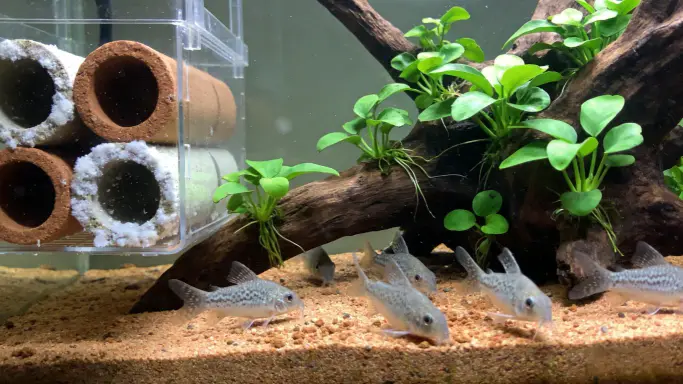

Many new fish keepers have had such an experience: after carefully selecting a fish tank, aquatic plants, and ornamental fish, within a few days of setting everything up, the fish become listless, lose their appetite, and even die one after another, while the water quality turns turbid and smelly. This frustrating situation is what is commonly known in the fish-keeping community as “New Tank Syndrome”. It is not a problem with the quality of the tank itself, nor is it because the fish are inherently weak; it is a series of chain reactions caused by the incomplete establishment of the new tank’s ecosystem. Many people mistakenly think that “filling the tank with water and adding fish” is all there is to fish keeping, but they overlook the invisible “microbial world” in the tank — it is these tiny beneficial bacteria that determine the life and death of the fish. This article will comprehensively break down New Tank Syndrome from its causes, identification, diagnosis, and resolution to prevention, helping beginners avoid mistakes and easily raise healthy ornamental fish.
Core Cause of New Tank Syndrome: The Truth About Ecological Imbalance
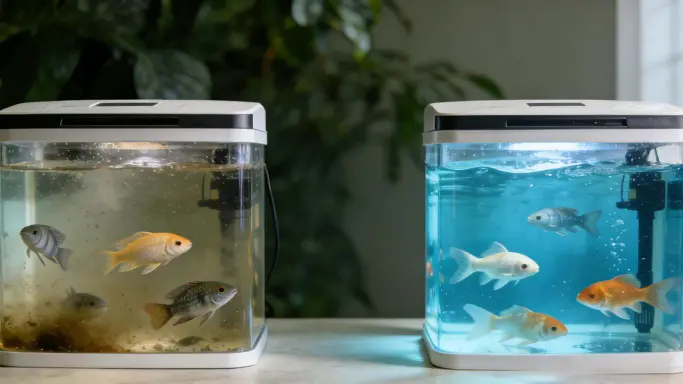
The essence of New Tank Syndrome is the failure to establish a “nitrogen cycle system” in the tank, leading to the accumulation of toxic substances and breaking the ecological balance. Simply put, fish continuously excrete feces and secrete mucus in the water; these substances decompose to produce ammonia — a highly toxic substance for fish. Even at very low concentrations, it can damage the fish’s gills, and long-term accumulation can directly cause fish poisoning and death.
Under normal circumstances, there are two types of nitrifying bacteria in the tank that work together to complete the “detoxification” process: the first type converts ammonia into nitrite (slightly less toxic than ammonia but still harmful to fish health), and the second type converts nitrite into nitrate (very low toxicity, which can be absorbed by aquatic plants or removed through water changes). This process is the “nitrogen cycle” and is the core of a stable tank ecosystem.
However, there are almost no nitrifying bacteria on the filter media, substrate, or decorations of a new tank. These beneficial bacteria take 4-6 weeks to multiply in large numbers in the tank and form a stable colony. During this “window period”, ammonia and nitrite continue to accumulate, and the “detoxification capacity” of the nitrifying bacteria cannot keep up with the production rate of toxic substances, leading to New Tank Syndrome.
In addition, three common mistakes made by beginners can accelerate the outbreak of New Tank Syndrome: first, adding too many fish at once, causing an immediate surge in toxic substances; second, over-cleaning the filter, killing the newly sprouted nitrifying bacteria; third, using tap water without dechlorination directly, as chlorine will directly kill nitrifying bacteria and irritate the fish.
Symptom Identification: “Distress Signals” from the Tank and Fish
The symptoms of New Tank Syndrome are divided into two categories: abnormal performance of the fish and abnormal water quality of the tank. As long as you observe carefully, you can find problems in time.
(1) “Distress Signals” from Fish
- Abnormal Swimming: The fish become sluggish and inactive, either staying motionless at the bottom of the tank or floating near the water surface, breathing rapidly, as if struggling in viscous liquid. In severe cases, they may roll over or twitch.
- Loss of Appetite: Fish that were originally active and eager to eat will suddenly refuse food. Even if their favorite bait is fed, they show no interest. Over time, they will gradually lose weight and become listless.
- Physical Abnormalities: The fish’s gills will become red, swollen, or pale, their fins will droop or be damaged, and their bodies may have white spots, congestion, or increased mucus secretion — these are typical signs of poisoning and stress.
It should be noted that larger fish, due to their larger gill area, absorb toxins faster, usually show symptoms first, and are also the most likely to die.
(2) “Abnormal Signals” from Tank Water Quality
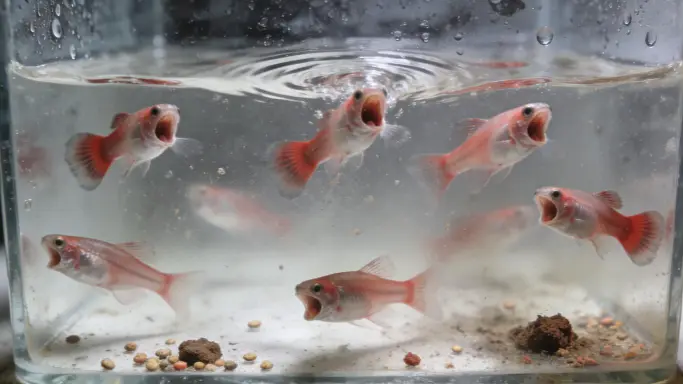
- Turbid Water Quality: The water in the new tank, which was originally clear, suddenly becomes turbid, appearing milky white, pale yellow, or even with flocculent substances, which cannot be clarified even after standing.
- Obvious Odor: The tank will emit a pungent fishy or swampy smell, which is a sign of ammonia and organic matter accumulation. The stronger the odor, the higher the concentration of toxic substances.
- Withered Aquatic Plants: If aquatic plants are planted in the tank, their leaves will turn yellow, rot, and fall off, because toxic substances will inhibit the growth of aquatic plants and even cause them to die.
Scientific Diagnosis: Home-Operable Water Quality Testing Methods
Judging only by symptoms may be confused with other problems such as fish illness or abnormal water temperature. The most scientific method is to use an aquarium water quality test kit to accurately determine whether it is New Tank Syndrome by testing key indicators. Beginners do not need to master complex professional knowledge; they only need to focus on testing 3 core indicators to make a quick diagnosis.
(1) Essential Tool: Water Quality Test Kit
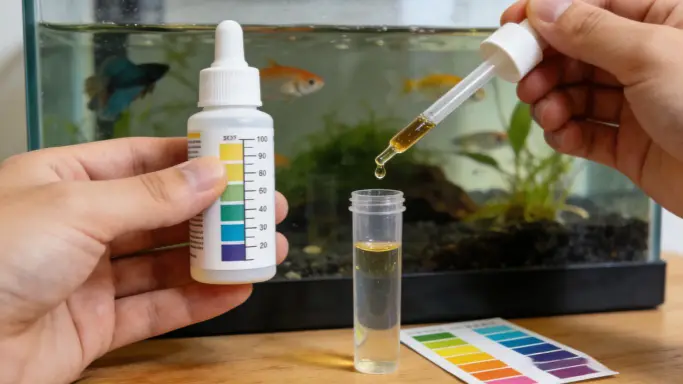
It is recommended that beginners purchase a comprehensive test kit containing “ammonia, nitrite, nitrate, and pH value”. It is easy to operate, requires no professional skills, and can produce results in a few minutes. It is cost-effective and an essential tool for fish keeping (equivalent to a “physical examination instrument” for the tank).
(2) Core Indicator Testing and Judgment Standards
- Ammonia: The normal concentration should be ≤ 0.1 mg/L. Once it exceeds this value, it is a dangerous area, indicating that nitrifying bacteria have not yet started working, toxic substances have accumulated, and the fish will show stress reactions; if the concentration is ≥ 0.5 mg/L, the fish will be poisoned quickly and need immediate treatment.
- Nitrite: The normal concentration should be = 0 mg/L. As long as nitrite is detected, it means that the nitrogen cycle is in the “intermediate stage”, toxic substances are still accumulating, and detoxification has not been completed; if the concentration is ≥ 0.3 mg/L, it will cause continuous damage to the fish.
- Nitrate: The normal concentration should be ≤ 40 mg/L. The presence of nitrate indicates that the second type of nitrifying bacteria has started working and the nitrogen cycle is progressing; if no nitrate is detected, it means that nitrifying bacteria have not yet been established, which is likely the initial stage of New Tank Syndrome.
- pH Value: Most ornamental fish are suitable for a pH value of 6.5-8.0. Excessive fluctuations in pH value (such as more than 0.5 fluctuations in a day) will put double pressure on the fish and nitrifying bacteria, accelerate the deterioration of symptoms, and the toxicity of ammonia will increase with the increase of pH value.
(3) Special Cases: Ruling Out Other Problems
If the fish show abnormal symptoms but the water quality test indicators are normal, it means that it may not be New Tank Syndrome, and other problems need to be investigated: such as abnormal water temperature (too high or too low), lack of oxygen in the tank, the fish themselves being ill, or spoiled bait. At this time, it is recommended to consult professional staff in aquarium stores or fish veterinarians to avoid misdiagnosis and mistreatment.
Targeted Treatment: Step-by-Step Solutions for New Tank Syndrome
Once New Tank Syndrome is diagnosed, there is no need to panic. The core solution is to “reduce toxic substances and help the reproduction of nitrifying bacteria”. By following the steps below, you can gradually alleviate the symptoms and restore the stability of the tank ecosystem.
Step 1: Emergency Water Change to Reduce Toxic Substance Concentration
Water change is the most direct and effective emergency method, which can quickly dilute ammonia and nitrite in the tank. Specific operation: adjust the water change volume according to the water quality test results — if the ammonia concentration is ≥ 0.5 mg/L, change 50% of the water every day; if the ammonia concentration is 0.1-0.5 mg/L, change 25%-30% of the water every day; change water continuously for 3-5 days until the concentrations of ammonia and nitrite drop significantly.
Notes: ① The new water must be dechlorinated in advance (you can use tap water dechlorinator or let it stand for more than 24 hours); ② The temperature difference between the new water and the tank water should not exceed 2℃ to avoid stress reactions in the fish; ③ Use a gravel vacuum to clean fish feces and residual bait in the substrate during water changes to reduce the source of toxic substances.
Step 2: Protect Nitrifying Bacteria and Accelerate Colony Establishment
Do not over-clean the tank at this time: do not scrub decorations or rinse filter media (especially biological filter media such as ceramic rings and biochemical cotton). These places are the “habitats” of nitrifying bacteria. Over-cleaning will kill the newly reproduced bacteria and cause the nitrogen cycle to restart.
Auxiliary products can be added appropriately: ① Bacterial cultures from a mature tank (such as borrowing filter media or substrate from a friend’s healthy tank and putting it into the new tank to allow nitrifying bacteria to “colonize quickly”); ② High-quality nitrifying bacteria preparations (choose products with a good reputation, avoid buying “quick-acting nitrifying agents”, which are mostly ineffective).
Step 3: Reduce Fish Burden and Avoid Secondary Damage
If there are too many fish in the tank, some fish can be temporarily transferred to a temporary isolation tank (the isolation tank needs to be dechlorinated and temperature-controlled in advance) to reduce the production of toxic substances; suspend feeding to avoid residual bait rotting and worsening water pollution. After the water quality stabilizes, feed a small amount multiple times.
Step 4: Continuous Monitoring Until Ecological Stability
Test the water quality every day, record the changes in the concentrations of ammonia, nitrite, and nitrate, and observe the state of the fish at the same time. When the concentrations of ammonia and nitrite drop to 0 mg/L, the nitrate concentration stabilizes below 40 mg/L, and the fish recover their vitality and eat normally, it means that the nitrogen cycle is basically established, New Tank Syndrome has been resolved, and normal maintenance can be gradually restored.
Prevention is Better Than Cure: Correct Startup and Daily Maintenance of a New Fish Tank
The best way to solve New Tank Syndrome is to prevent it from the source. As long as you master the correct method to start a new tank and develop good daily maintenance habits, you can completely avoid this mistake.
(1) Correct Startup Methods for New Fish Tanks (3 Practical Schemes)
- Fishless Cycling Method (Most Recommended for Beginners): After filling the new tank with dechlorinated water, do not add fish. Add a small amount of ammonia every day (to simulate fish excrement), turn on the filter at the same time, and continuously monitor the water quality. After the concentrations of ammonia and nitrite drop to 0 and the nitrate concentration stabilizes, add fish. The whole process takes about 4-6 weeks, which can completely avoid New Tank Syndrome.
- Bacterial Inoculation Method (Quick Startup): Borrow filter media, substrate (or ceramic rings) from a friend’s healthy and mature tank and put them into the filter of the new tank. These filter media are covered with a large number of nitrifying bacteria, which can quickly start the nitrogen cycle and shorten the time to 2-3 weeks.
- Pioneer Fish Startup Method: First put 2-3 hardy fish (such as zebra fish and guppies) as “pioneer fish”. The waste they produce provides nutrients for nitrifying bacteria. After the water quality stabilizes and the fish are in good condition, gradually add other fish, avoiding adding too many fish at once.
(2) Daily Maintenance Habits (The Key is “Regularity”)
- Regular Water Changes: Change 10%-20% of the water every week to keep the water quality stable, dilute nitrate, and supplement fresh water; still pay attention to dechlorination and temperature control during water changes, and avoid changing too much water at once.
- Filter Maintenance: Maintain the filter once a month, only rinse the filter media with tank water (avoid using tap water, as chlorine will kill nitrifying bacteria), clean the debris in the filter, and ensure the filtering effect.
- Regular Testing: Test the water quality once a week to find problems in time and avoid the accumulation of toxic substances; it is recommended to test every day during the initial startup of the new tank.
- Reasonable Feeding: Feed a small amount multiple times to avoid residual bait. Feed 1-2 times a day, and the amount of each feeding should be enough for the fish to finish within 5 minutes. Remove the remaining bait in time.
Advanced Tips: Practical Methods to Accelerate the Nitrogen Cycle
If you want to shorten the time of the nitrogen cycle and stabilize the new tank faster, you can try the following advanced tips, which are safe and effective, suitable for beginners with a certain foundation.
(1) Use Live Plants for Natural “Detoxification”
Plant fast-growing aquatic plants (such as hornwort, water sprite, and cryptocoryne), which can directly absorb ammonia and nitrate through their leaves, equivalent to a “natural water purifier”. They can not only reduce the accumulation of toxic substances but also buy time for the reproduction of nitrifying bacteria. Note: Avoid adding plant fertilizers during the initial cycling stage to prevent algae growth, which will instead increase the water quality burden.
(2) Control Water Temperature to Optimize the Bacteria Growth Environment
Nitrifying bacteria multiply faster in a warm environment. It is recommended to control the water temperature of the new tank at 24-26℃. This temperature can not only speed up the reproduction of nitrifying bacteria but also ensure the safety of the pioneer fish; avoid the water temperature being too high (exceeding 28℃), otherwise, it will enhance the toxicity of ammonia and cause damage to the fish.
(3) Increase Oxygen to Improve Bacteria Activity
Nitrifying bacteria are aerobic bacteria and need sufficient oxygen to work efficiently. During the startup of the new tank, an air stone or oxygen pump can be installed to increase water surface agitation, improve the oxygen content in the water, and accelerate the nitrogen cycle. At the same time, sufficient oxygen can also alleviate the hypoxia symptoms of the fish.
(4) Choose Filter Media Reasonably
The larger the surface area of the filter media, the more attachment space for nitrifying bacteria. It is recommended to choose ceramic biological filter media (such as ceramic rings and bio-balls), whose surface area is much larger than that of plastic filter media, which can provide more “habitats” for nitrifying bacteria and improve the detoxification capacity of the tank.
Frequently Asked Questions (FAQ)
Q: How long after adding fish to a new tank will New Tank Syndrome occur?
A: Usually 3-7 days after adding fish, depending on fish quantity, water temperature and filtration. Observe daily for the first 2 weeks.
Q: Are bottled nitrifying bacteria really useful? Can they completely avoid New Tank Syndrome?
A: They are auxiliary, not a complete solution. They can shorten the nitrogen cycle but not replace patience and regular maintenance.
Q: If the new tank becomes turbid, is it definitely New Tank Syndrome?
A: No. It can be biological (syndrome) or physical (dust, residual bait). Test water quality to distinguish.
Q: Can I change all the water at once to solve New Tank Syndrome in a new tank?
No. It will stress or kill fish. Change 25%-50% of water daily to dilute toxins.
Q: Which fish are suitable as “pioneer fish” for a new tank? Which are not?
Suitable: zebra fish, guppies, platy fish. Unsuitable: neon tetras, angelfish, discus fish.
Q: Do I still need to change water regularly after the nitrogen cycle of the new tank is completed?
Yes. Change 10%-20% weekly to dilute nitrate and supplement trace elements.
Q: Why does over-cleaning the tank cause New Tank Syndrome?
It kills nitrifying bacteria, interrupting the nitrogen cycle. Clean debris only and rinse filter media with tank water.